
An island of adventure! Discover rare lemurs, colourful tribes, stunning national parks, tropical beaches, bustling markets and ever-changing scenery in 12 breathtaking days
- Antananarivo - capital of Madagascar
- Andasibe National Park - See the largest lemurs, the Indri Indri
- Beautiful Antsirabe
- Colourful Ambositra - home of the wood carving industry
- Ranomafana National Park - Lemurs, chameleons, birds and reptiles
- Wine tasting at Ambalavao
- Isalo National Park - the Natural Swimming Pool
- Diving, snorkelling, birdwatching or relaxing at Ifaty Beach
- Andsibe Village and tribal people
- 11 breakfasts
- 11 days 2-3 star hotels (option to upgrade to 3-4 star accommodation). Please Note: Accommodation named, may be subject to change but will be of a similar standard
- Airport arrival and departure transfer on days 1 and 12
- Andasibe night walk • Visit to Natural Reserve of Andasibe
- Ranomafana National Park Visit • Wine tasting and visit to paper factory
- Hike in Isalo National Park
- English speaking driver
- Specialist local guides in the National Park
- All entrance fees to sites, and excursions mentioned in itinerary
- All relevant transfers and transportation (for 3 or less pax we use a Peugeot sedan car and for 4 or more pax we use a Mercedes Sprinter). Please note, a supplement will apply for an air-conditioned vehicle, contact us for details
Upon arrival into Antananarivo, the capital of Madagascar, you will be met and transferred to your hotel. The remainder of the day is at leisure.
Antananarivo – Andasibe. After breakfast we start our journey with a drive to Andasibe through the green and luxuriant vegetation of the east. This first step brings us to a very humid part of the country with many primary forests and lakes. Along the way we will see Merina villages in the Rocky Mountains. We arrive at Andasibe in the afternoon and check-in to the hotel. This evening, we depart from the hotel at approximately 19h00 on a night walk in the area of Andasibe to observe night active lemurs and other nocturnal animals. We return to the hotel where we overnight.
Distance: 150 km
Standard Accommodation: Grace Lodge or similar (bungalows with en-suite bathrooms & veranda)
Uprgraded Accommodation: Andasibe Hotel or similar (rooms with en-suite bathrooms & veranda) Overnight - Andasibe
Day 2 starts with a morning visit to the Special Reserve of Andasibe to see the Indri, the largest lemurs on the island. This 810 ha reserve is unique with its endemic fauna and flora and contains a wide variety of orchids, canopy, and endemic animals like chameleons, tenrecs, and many birds. After the visit we walk through the orchid park to admire the beautiful flowers. In the afternoon, we visit Andasibe village, which is typical of the Betsimisaraka (“The-ManyInseparables”) community, the second largest tribe on the island who are known to cultivate rice and live mainly off the forest. This short visit gives us insight to the local people, to see how they live and what they eat. We overnight at the same hotel.
Standard Accommodation: Grace Lodge or similar (bungalows with en-suite bathrooms & veranda)
Uprgraded Accommodation: Andasibe Hotel or similar (rooms with en-suite bathrooms & veranda) Overnight - Andasibe
Andasibe - Antsirabe. We drive back to Tana, and head south to Antsirabe, across the highland landscape with its beautiful rice fields on display. The spectacular eroded hills called ‘lavaka’ remind us of the Far East with its rice fields and green landscape with vegetables and fruit trees. We stop in Ambatolampy for a quick visit to this huge agricultural city, also recognised as a source of aluminium. Arrival in Antsirabe is around 17h00. ‘The place of salt’ is an elegant city and known as the centre of the beer industry - we can smell the Star Brewery as we enter the town! Founded by Norwegians in 1856, it is the only place which really feels and looks like a European city. It has a temperate climate and therefore fruit and vegetables which grow in colder climates, are found in Antsirabe.
Distance: 309 km
Standard Accommodation: Chambres du Voyageur, Couleur Cafe or similar (rooms with en-suite bathrooms)
Upgraded Accommodation: Vatolahy or Royal Palace Hotel, or similar (rooms with en-suite bathrooms) Overnight - Antsirabe
Antsirabe - Ranomafana National Park. After breakfast we drive to Ambositra, the centre of Madagascar's wood carving industry. The highlands are characterized by its architecture: The houses are made with ornately carved wooden balconies and shutters with bright colours. Further on we pass the ‘le col de tapia’, a type of tree resistant to bush fires. The landscape is still dominated by rice fields, pine forests, eucalyptus trees and rocky mountains. We turn off from the main road to reach our destination for the day: Ranomafana National Park.
Distance: 250 km
Standard Accommodation: Centrest, Chez Gaspard or similar (rooms with en-suite bathrooms)
Upgraded Accommodation: Setam Lodge or similar (rooms with en-suite bathrooms) Overnight - Ranomafana National Park
The approximately 40,000 ha of Parc National de Ranomafana with its rain forest covered hills and abundant wildlife, has long been considered one of Madagascar’s highlights, and is one of the country’s national parks most heavily visited. Its entrance lies about 7 km from Ranomafana village and altitudes in the park range from 800
m to 1200 m. In addition to its densely forested hills, Ranomafana’s terrain is characterised by numerous small streams which plummet down to the beautiful Namorona River. Although much of the region has been logged, the easternmost part of the park retains relatively large areas of primary forest. You will go for long walks in the National Park spotting some of the lemurs, chameleons and other animals.
Accommodation: Centrest or similar (rooms with en-suite bathrooms)
Accommodation (Upgraded departure) Setam Lodge or similar (rooms with ensuite bathrooms) Overnight - Ranomafana National Park
Ranomafana - Fianarantsoa – Isalo. Returning on the road we came on, we leave Ranomafana and pass Fianarantsoa ‘the city where one learns good things’. It is the gate to the South, the capital of the Betsileo tribes and the centre of the catholic religion. Most of the best schools in the country are also found here. We then head southwards, with our first stop in Ambalavao to visit a wine industry for wine tasting. Ambalavao is the centre of wine industry - the climate is said not to be ideal for grape vines, but it is a tradition left by the priests and monks who lived in the area of Fianarantsoa. Still in Ambalavao, we visit the ‘Anteimoro Paper Factory’ which is a vestige of the Arabian civilisation on the island. We continue to Ihosy the capital of the Bara tribes, who are shepherds of Zebu, and further on pass through the mountain chain of Andringitra, which serves as a transition between the dry south and green highlands with its famous ‘3 hillocks’ and its huge ‘archbishop's cape’. Along the way we will see from afar a spectacular huge granite dome with twin rock towers called ‘the gate of the south’, which in fact marks the end of the highland and the beginning of the south. The ‘Bishop's hat’ is another noticeable, imposing formation and a sacred location for the local people - a place where their ancestors chose a collective suicide rather than to give in to the Merina tribes. We then pass through the huge ‘Plateaux de Horombe’ with its very deep red soil, which reminds us of ‘the no man's land’ and we arrive in Isalo.
Distance: 355 km
Standard Accommodation: Isalo Ranch, or similar (rooms with en-suite bathrooms)
Upgraded Accommodation: Isalo Rock Lodge or Jardin du Roy, or similar (room with en-suite bathroom & air-conditioning) Overnight - Isalo
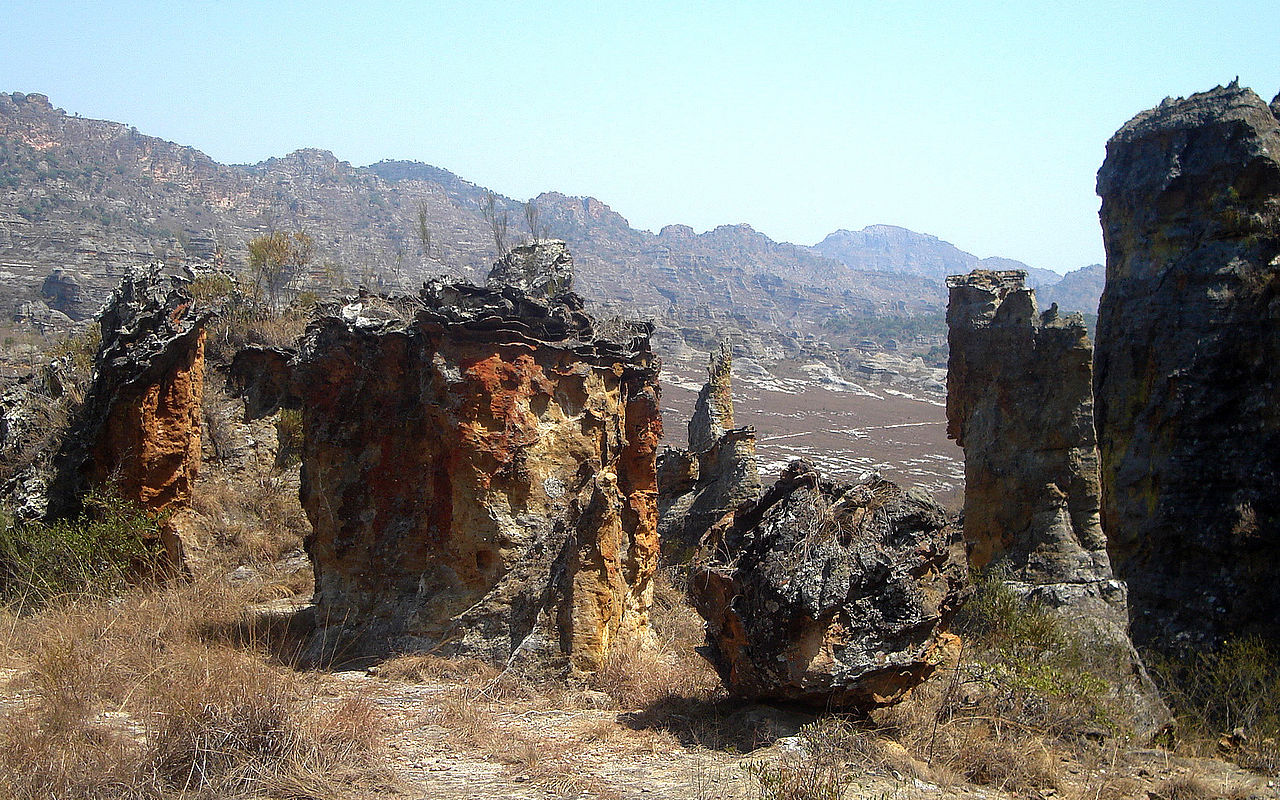
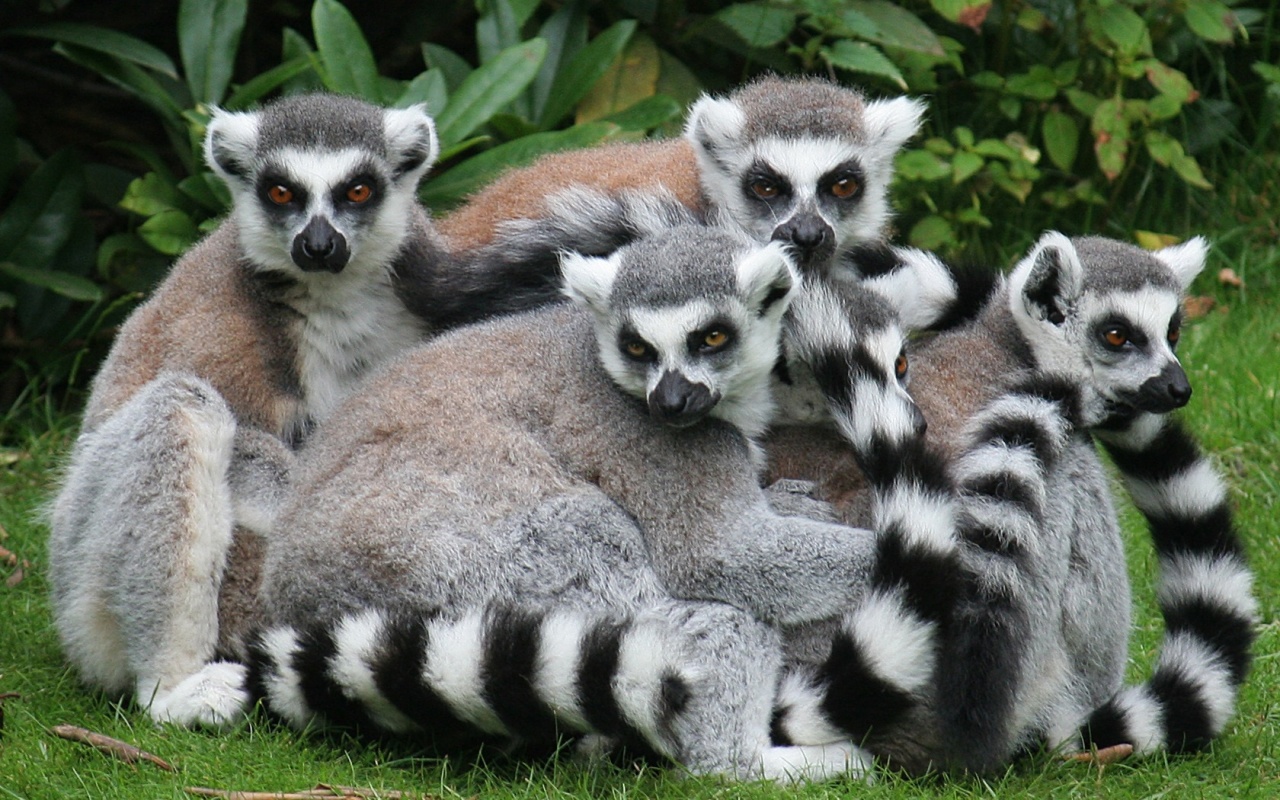
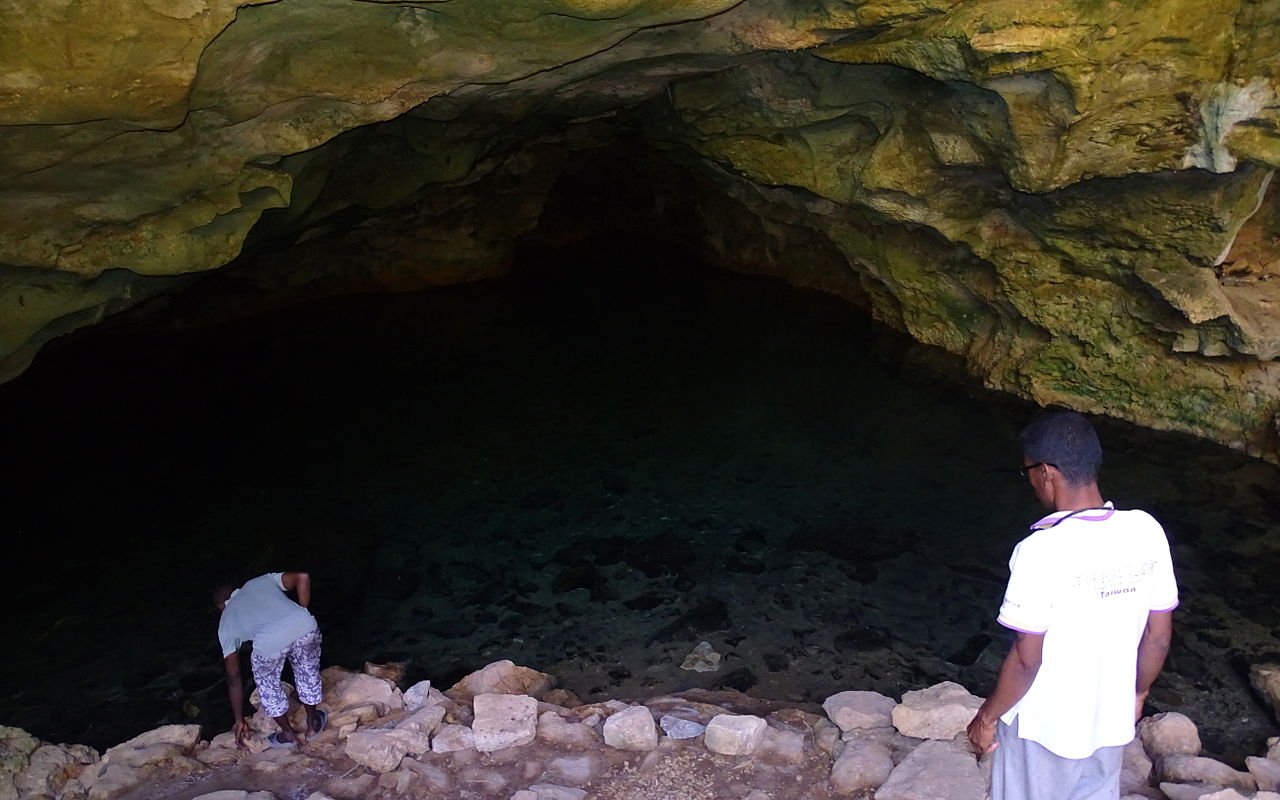
Today, we will visit and hike in Isalo National Park. The park covers an area of 81,540 ha, comprising of the entire stretch of the Isalo massif. This huge mountain is very spectacular with its eroded sandstone elevations. After a 10 minute drive from Ranohira village, we park our car and walk about 1½ hour to reach the Natural Swimming Pool. Along the way we will see vegetation like Uapaca bojeri, Pachypodium rosulatum or ‘elephant's foot’ and Aloe isaloensis, a native species of aloe endemic to Isalo. The eroded mountains also served as a place where the Bara kept their dead before they could bury them in their actual tombs. We start our climb and reach the massif after walking about 20 minutes, where we will have a spectacular view of the huge sandstone mountains with its beautiful colours and its strange and battered formations creating many different images like ‘the tortoise’, ‘the masks’ and ‘the crocodiles’. We see small streams of water, and rivers which are marked by lines of brilliant green, generally made up of numerous Pandanus pulcher and the delicate, slim-stemmed, feathery leaved palm Chrysalidocarpus isaloensis. Along the way, there may be sifakas, brown lemurs and ringtailed lemurs, as well as fifty-five species of birds, lizards and snakes. We finally reach the swimming pool, with its crystal clear water - a great reward after a long and very hot walk.
Standard Accommodation: Isalo Ranch, or similar (rooms with en-suite bathrooms)
Upgraded Accommodation: Isalo Rock Lodge or Jardin du Roy, or similar (room with en-suite bathroom & air-conditioning) Overnight - Isalo
Isalo - Ifaty. After breakfast we continue to Tuléar, the terminal of the National Road N° 7. This part of our journey brings us to new scenery among the dry forests of the west and the spiny desert of the south. On the way, we admire the different ‘Mahafaly tombs’ and the ‘Antandroy tombs’. After a short visit of Tuléar we drive to Ifaty, which lies about 27 km from Tuléar. Due to the bad condition of the road, it will take us about 2½ hours to reach Ifaty, the driest part of the country. Situated in the Deep South, the landscape is dominated by the cactus-like, spiny forest of different euphorbiaceae and didieraceae. We will cross the dry and sandy soil where the local people battle to find drinking water. Mangrove trees line the coast alternated by Vezo communities which earn their living from fishing. We will see many small pirogues with men who go out fishing twice a day, while children and women wait on the coast to collect the fish before taking them to Tuléar for sale.
Distance: 265 km
Standard Accommodation: Hotel de la Plage or similar (rooms with en-suite bathrooms)
Upgraded Accommodation: Le Paradisier, or similar (rooms with en-suite bathrooms) Overnight - Ifaty
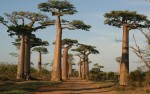
Ifaty lies on the beach and it is therefore an ideal place for diving and snorkelling and a popular place for birdwatchers. Here you can also experience the Vezo fishermen's life. Many excursions are possible on this leisure day. Visit the ‘Reserve Domergue’, a communal conservation area where one will see two kinds of baobabs, spiny bush, reptiles like ‘boa madagascariensis’, geckos and the ‘chameleon parsoni’, which is one of the largest chameleons in the world. You can also take a boat trip to see whales. From July to mid September, whales come to the cool seas of Madagascar to give birth to their young. It is a spectacular experience, and it is possible to see the whales very near to the boat. Situated in the largest lagoon of the country, Ifaty is also protected by a large coral reef, which makes it an ideal place for diving and snorkelling. In the afternoon we can walk to the village of Mangily to visit a local school and experience the Vezo fishermen's way of life, especially as they return from fishing.
Standard Accommodation: Hotel de la Plage or similar (rooms with en-suite bathrooms)
Upgraded Accommodation: Le Paradisier, or similar (rooms with en-suite bathrooms) Overnight - Ifaty
Ifaty - Antananarivo. Early in the morning around 06h00, transfer to the airport for your flight back to Tana (Please note the price does not include cost of internal flight Tulear Antananariva approx Euro 275. This should be booked in conjunction with international flight or we can book it for you upon request).
After check-in at the hotel, you have the afternoon free to explore and to do some sightseeing. The capital of Madagascar is also called the ‘City of Thousands’ and it is where the first King started to unify the different kingdoms of the island. Tana was built in three stages: The high city, the first area occupied during the regal period where the old queen's palace is situated; the mid-city, where all the chic boutiques of the capital are found; and then the low city, which is the commercial area of the town. Walk from the high city to see the Rova, the queen's palace, and the house of the first minister during these days, which is now a museum. All of these were built by Frenchman Jean Laborde during the royal period. The mid-city, or the administration area, ends at the Rainiharo tombs and the lower town is situated in the main avenue called ‘L'avenue de l'independence’ dominated by the railway station.
Distance: 20 km
Standard Accommodation: Residence Lapasoa or similar (rooms with en-suite bathrooms)
Upgraded Accommodation: Hotel Carlton or Palissandre Hotel or similar (rooms with en-suite bathrooms) Overnight - Antananarivo
Today is the end of our tour and you will be transferred to the airport for your onward flight
Exclusions
N/A
N/A