
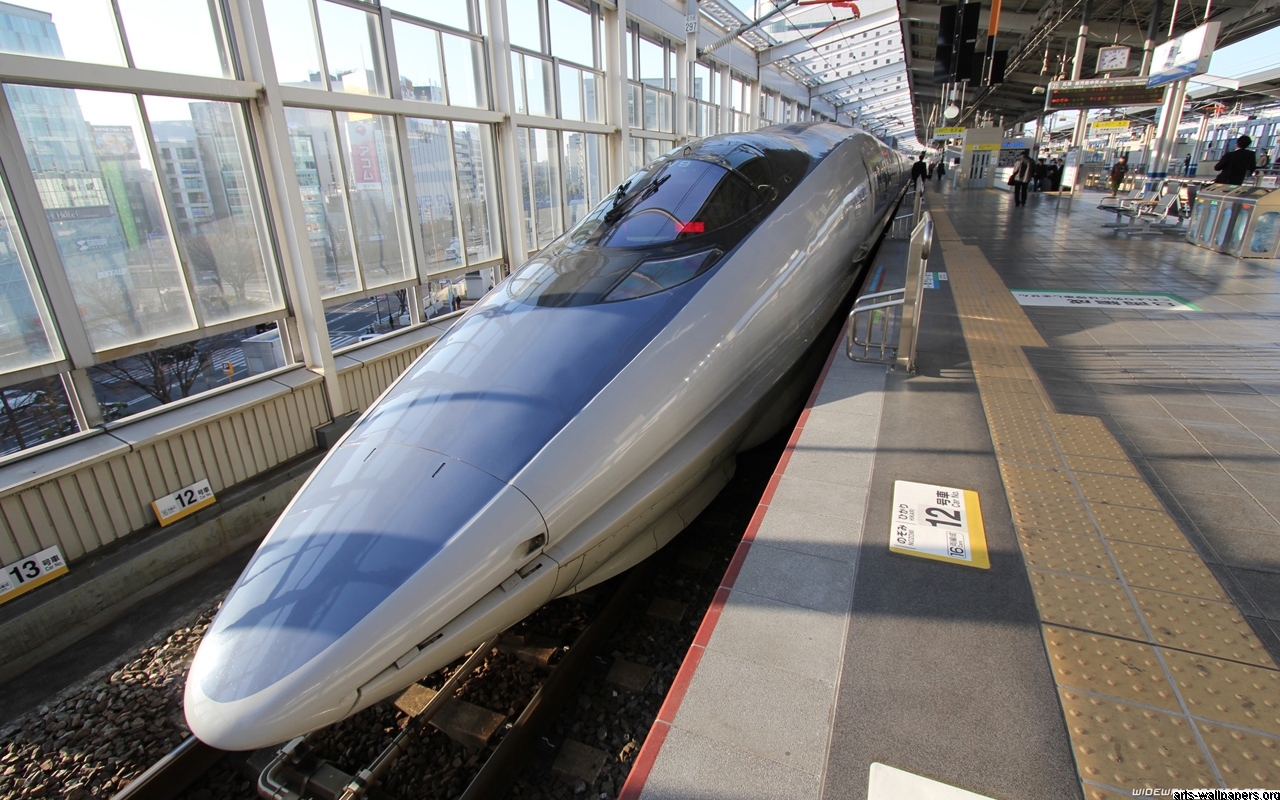
This 13 day adventure takes in the must-see sites of Tokyo and Kyoto as well as visiting the mountainous town of Takayama, impressive Himeji Castle and of course wellknown Hiroshima and the famed Torri Gate of Miyajima Island. For an authentic Japanese experience ride a bullet train, stay in a ryokan and take a dip in natural hot springs.
- Tokyo - Sensoji Temple district and temple, Harajuku, Takeshita street, Meiji Shrine & Shibuya Crossing
- Kamakura - Big Buddha Statue, Hokokuji Zen temple and the Bamboo Forest and delightful village atmosphere. Opt to take part in a Tea Ceremony
- Lake Kawaguchi located within Fuji Hakone Izu National Park - spectacular mountain scenery and views of Mt Fuji
- Staying in a ryokan - sampling Japanese hospitality, bathing in natural hot springs, wearing a Yakata (casual Kimono) and sleeping on a futon
- Kyoto - UNESCO listed Nijo Castle, walking tour of Gion (the Geisha district), optional Japanese tea ceremony and cooking class
- Kyoto - walking tour of the famed Geisha district (Gion), with its ancient cobbled streets, streams, bridges and quaint tea houses and the opportunity to see Geisha and Maiko en route to their next engagement
- UNESCO Listed Himeji Castle - the towering 6 story structure is the best preserved and largest of all castles in Japan
- Hiroshima - Peace Park, Peace Memorial Museum, UNESCO Listed A-Bomb Dome and Children's Peace Monument (with thousands of paper cranes from children around the world)
- Miyajima Island with its UNESCO Listed iconic Red Torii Gate (Itsukushima shrine) standing in the sea. Cable to the top of Mt Misen - the highest peak on Miyajima for spectacular views of the Seto Inland Sea, some 150 islands and Hiroshima
- Takayama - beautifully preserved old quarter, local market and visit to sake distillery
- Hida Folk Village - an open-air museum of farmhouses illustrating the traditional architectural styles of the mountainous regions of Japan
- 7 breakfasts and 1 Japanese dinner at the
- Lake Kawaguchi ryokan
- 12 nights 3 star accommodation (including 1 night at a traditional ryokan (Japaneseinn)
- Guided sightseeing and walking tours in Tokyo, Kamakura, Lake Kawaguchi, Kyoto, Himeji, Hiroshima, Miyajima Island, Takayama
- Lake Kawaguchi & Mt Fuji - Kachikachiyama Ropeway and observatory. For tours staying at Lake Kawaguchi between 15 Apr – 28 May each year we'll visit to the Fuji Shibazakura (Moss Phlox) Festival with Mt Fuji in the distance.
- Ferry to Miyajima Island and cable car to the top of Mt Misen
- Escorted by a licensed English speaking Japanese tour guide
- Airport arrival transfer - by train from Narita or Haneda International Airport
- Departure transfer - by train to Narita or Haneda International Airport (unescorted)
- All transportation and transfers - buses, trains and rail passes (including Suica swipe Card and Japan Rail Pass)
- Baggage forwarding service from Tokyo to Kyoto (one bag per person)
Saturday. Welcome to Japan and the startof your holiday! Arrival at Haneda or Narita Airport, you will be met by your tour guide or a representative from On The Go Tours. The prominent sign depicting our company logo easily identifies our representative. Should you not be able to locate our guide/ representative please do not leave the arrivals area. If after waiting 30 minutes at the arrivals area and you are still unable to locate our guide/ representative, please call the 24 hour contact person noted on your tour voucher. If arriving on a flight landing prior between 06:00 - 06:30 and you've sped through customs to find that our guide is not in the arrivals hall to meet you, please be patient as our guide will enroute arriving on the first train of the day cheduled to arrive at 06:30 without delays.After meeting up with your tour guide/ representative, together you will travel by train into the heart of the city and check into your hotel. Overnight - Tokyo
Today we explore the capital. Taking the subway to Asakusa we visit the lively Sensoji Temple district, which is home to Tokyo’s first temple and scores of interesting souvenir and craft stalls. In the afternoon we head to Harajuku, which is a magnet for young and fashionable Tokyoites with its hip shops and cafes. Here we’ll visit the impressive Meiji Shrine where the emperor Meiji and his wife are enshrined. Yoyogi Park beside the shrine is a popular hangout for locals on Sundays with bands playing, drum circles, dancers and busking, if you are interested. The last stop of the day is the Shibuya crossing - regarded as one of the busiest intersection in
the world. The famed junction has no less than 7 pedestrian crossings and when the traffic lights turn red a wave of pedestrians, up to a 1000 at once, converge onto the intersection from every direction. Here we’ll grab a coffee or cold drink and rest our weary feet at the tarbucks, with second floor vantage point, located directly opposite the crossing and look down upon the exciting spectacle, guaranteed to give that 'I'm in Tokyo feeling'. Total walking distance today: Approx 8 - 10km. This evening offers free time though if travelling in January, May and September (tonight or any other night you are in Tokyo) you might like spend the evening watching a Sumo tournament. There are three professional Sumo tournaments held in Tokyo each year with each tournament lasting 15 days with a number of matches held throughout the day. If interested, you should book tickets independently in advance as on the day of a match only a few balcony seats are held back for same-day sale. Overnight - Tokyo
Tokyo - Kamakura - Tokyo. This morning weboard a train for a day trip to Kamakura, Japan’s first feudal capital, which is just an hour from Tokyo. Kamakura is a popular seaside location with a quaint village life feel and some stunning zen temples. Here we’ll visit the conic bronze Big Buddha and the Zen Temple of Hokokuji with its beautiful bamboo garden. Here you can drink tea, learn about the tea ceremony and enjoy the laid back atmosphere from the tea house before walking the cobbled shopping district - for great locally made items before returning to Japan’s bustling capital for the night. Tonight, we organise a Shabu Shubu (a traditional Japanese hot pot meal) if the majority of the group are interested. Overnight - Tokyo
Today offers a guided tour of the Tokyo Edo Museum which focuses on the lifestyle and culture experienced by Tokyoites over the ity’s 400-year history. The museum houses some of he city’s best original artefacts and replicas of Edo-era buildings and landmarks, along with several large-scale models. The remainder of the day offers free time. For tours departing after 01 Oct 2017 a visit to he National useum replaces our visit to the Tokyo Edo Museum as it is closed for renovation. Overnight - Tokyo
Tokyo - Lake Kawaguchi. This morning we travel by highway bus (with luggage forwarding) to Lake Kawaguchi, located at the foot of Mt Fuji in the Fuji Hakone Izu National Park. The scenery is stunning with panoramic views of a snowcapped Fuji most of the year. Upon arrival we’ll travel along the Kachikachi-yama Ropeway and visit the observatory. For tours staying at Lake Kawaguchi between 15 Apr – 28 May each yeawe’ll visit the Springtime Fuji Shibazakura (Phlox Moss) Festival, held at Motosu Lake, where the landscape is covered in a vibrant, hot pink moss ith Fuji as the backdrop. Tonight you'll bed down in a traditional Japanese Inn (ryokan) At the ryokan, we'll be served a traditiona Japanese dinner and you can take a relaxing dip in the natural hot spring baths. Note: If you have booked a single room it is not guaranteed that a single room will be provided at our ryokan in Lake Kawaguchi Ryokans by their very nature don't offer single rooms so instead accommodate a single person n a double room (a room large enough for 2 persons). We are only able to confirm whethe a single room is available or not approx 2 weeks prior to departure. If a single (sole use room is not available you will be matched up with a fellow traveller of the same sex for this night and the proportionate amount of single supplement cost refunded to you. Overnight Lake Kawaguchi (D)
Lake Kawaguchi – Kyoto. The area has somegreat hiking trails and early this morning you might like to opt for a hike along the foreshores of the lake. Travel by bus to Mishima, then bullet train to Kyoto - Japan’s ancient and cultural capital. As one of the most culturally rich cities in Asia, Kyoto is home to an abundance of UNESCO World Heritage sites, Buddhist temples and Shinto shrines. Upon arrival we'll discover anjusagen-do Temple famous for its statues of Kannon. The one thousand life-size statues of Kannon, made of Japanese cypress and covered in gold leaf are impressive. Standing in rows of 10 each hand carved so that no two are alike. Late afternoon we head to Gion, for a walking tour of this famous Geisha district. After you may wish to watch a cultural performanceat Gion Corner Theatre where you'll have the opportunity to watch a Maiko (apprentice Geisha) performing. Overnight - Kyoto (B)
Golden Pavilion & free timeThis morning we offer a guided tour of Nijo Castle, one of the city’s most impressive UNESCO sites. Built by the first Tokugawa shogun in 1603, the exquisite Nijo Castle is a wonderful example of Momoyama architecture.After we visit Kinkakuji (Golden Pavilion) a stunning Zen Buddhist temple, part of the Historic Monuments of Ancient Kyoto World Heritage Site. The top two floors of the monument are completely covered in gold leaf. Set upon a small lake with landscaped gardens the large completely gilt structure is impressive as it is beautiful Temple. Kinkakuji Temple continues to be one of Japan's most visited temples. This afternoon offers free time for you to relax or to further discover the many sights of Kyoto at your own pace. Consider visiting Fushimi Inari Shrine, famous for its winding path lined by thousands of bright red torii gates. Justa short train ride away from the main Kyoto station, this must-see sight is free to visit and is open 24 hours a day. You might also wish to hire a Kimono and walk the streets as many Japanese do or take part in a cooking lesson. Overnight -Kyoto (B)
Kyoto - Himeji - Hiroshima. We travel by bullet train to Hiroshima today, stopping en route at Himeji to visit the UNESCO Listed Himeji Castle, nicknamed the White Egret due to its colour and elegant shape. Himeji is Japan’s best preserved and largest castle, known for its mazelike defences. After taking in the panoramic views from the top of its 6 story watch tower there is time to stroll the local Saturday market which often takes place here, before take the bullet train to Hiroshima. If you are a baseball fan consider booking tickets to watch the Carp play. The Carp, Hiroshima beloved professional baseball play games at home between May - Oct at Mazda Stadium. We suggest you jump online and book seats in advance. Luggage: Today we will travel with all our luggage from Kyoto to Hiroshima via Himeji, rather than forwarding our luggage and not having it arrive till tomorrow afternoon. Upon arrival at Himeji luggage will be stored at the lockers at the train station or at the bus station should all lockers at the station be full. Although the rate of crime in Japan is extremely low please keep all your valuable with you and do not store them in the locker. After touring Himeji we'll re-unite with our luggage and carry it with us aboard the bullet train to Hiroshima. We have allowed plenty of time at each transfer point to so that you will not be hurrying along with heavy (hopefully not to heavy) luggage. Overnight -Hiroshima (B)
Located off the coast of Hiroshima is MiyajimaIsland, one of Japan's most picturesque destinations. Today we take the ferry out to the island and see the dramatic red 'floating' Tori Gate at the revered Itsukushima-jinja Shrine a UNESCO World Heritage Listed site. The iconic gate seems to float on the water bu at low tide can reached by foot. It stands 16 metres high and is made from campho wood. As we explore the island we'll see furthe Shinto shrines, towering pagodas and pavilions before soaking up the incredible views of the Seto Inland Sea, dozens of nearby islands and Hiroshima city from our cable car ride to the top of Mount Misen, the highest point of the island. Free time is offered before we return to Hiroshima for the night. Tonight, we'll make a reservation for konomiyaki - a mix between a savoury pancake and omelette a local speciality of Hiroshima. Okonomiyaki is always a fun night its inexpensive and is washed down perfectly with a Asahi beer. Overnight - Hiroshima (B)
Hiroshima - Takayama. Hiroshima is a city that needs little introduction, it is of course infamous for being the first site where one of two atomic bombs were dropped on Japan at the end of World War II. This morning we visit Peace Park and Peace Park Museum which are a moving reminder of Hiroshima’s tragic past.We’ll see the iconic A- omb Dome one of the very few buildings left standing after the blast and visit the and Children's Peace Monument a memorial to the children killed, where schools from around the world donate paper origami cranes, signifying hope and peace. This afternoon we take the bullet train to Nagoya, followed by another scenic train journey up the mountains to Takayama.Overnight - Takayama (B)
Takayama is delightful town in the heart of the Hida Mountains. Established in the 16th century as the castle town of the Kanamori family, Takayama is now famous throughout Japan for its beautifully preserved old-quarter, which has a series of streets lined with Edo style wooden buildings. The town also has many shrines and temples, giving rise to the title of Little Kyoto’. This morning we explore Takayama’s old quarter, where you can wander around the shops and market talls where you can wander around the shops and market stalls which sell everything from vegetables and pickles to raft, ceramics and tools. After there's a visit a sake distillery to sample the town’s famous and potent sake. This afternoon you can opt to see the fascinating Hida folk village (entrance fee & transport payable on the spot should you wish to go) where more than 30 houses from across the Hida region have been rebuilt on a hillside erlooking the town. Alternatively, enjoy free time in Takayama independently exploring. or dinner tonight we recommend ampling Takayama’s delicious Hida beef at one of the many restaurants or Beef Burger cafes. Overnight - Takayama (B)
Takayama – Tokyo. This morning we embark on the scenic Higashiyama walk (the Eastern Mountain Walk) which takes in a number of temples set into the hillside and offers wonderful views over the city. Later we take the train back down the mountains to Nagoya to catch the bullet train to Tokyo. Overnight -Tokyo (B)
Thursday. Our tour comes to an end today. Travel (unescorted) back to Narita International Airport on board the Narita Express train.
Exclusions
N/A
N/A